
How effective is The Mosaic Company's sales and marketing engine at converting agronomic demand into stable cash flow?
The Mosaic Company's go-to-market links large-scale phosphate and potash production to fragmented growers via technical agronomy and digital tools; in 2025 the firm reported improved product-mix margins and resilient FCF supporting dividends, signaling commercial execution strength.
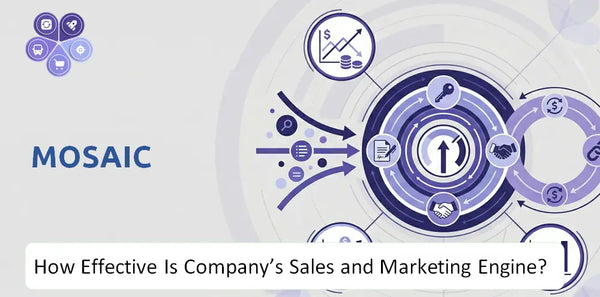
The sales engine's focus on premium performance products and agronomic support raises demand quality and lowers volume sensitivity; investors should watch margin mix, trade inventory days, and customer retention for durability and risk control. Mosaic Porter's Five Forces Analysis
Which Customers and Segments Is Mosaic Trying to Win?
The Mosaic Company targets large agricultural wholesalers and retail distributors in North America and Brazil, professional farmers in Brazil's Cerrado, and high-yield precision agriculture operations that pay premiums for performance fertilizers. These buyer groups drive bulk volumes, margin per ton, and growth in specialty product sales.
 Core wholesale and distributor accounts
Large-scale agricultural wholesalers and retail distributors in North America and Brazil deliver the scale Mosaic needs for bulk potash and phosphate shipments; they account for the bulk of tonnage and stabilized cash flow.
Professional farmers in the Cerrado
Mosaic Fertilizantes focuses on professional farming operations in Brazil's Cerrado, where Mosaic holds about 20% market share locally; these customers boost year – over – year growth and regional margin uplift.
Precision agriculture and specialty fertilizer users
High – yield farmers and agribusinesses requiring MicroEssentials, K – Mag, and other specialty blends are targeted for higher margin per ton and recurring specialty sales tied to yield gains and nutrient efficiency.
Why these segments drive Mosaic's commercial strategy
Priority buyers combine volume (wholesalers), regional expansion (Cerrado professional farms), and margin expansion (specialty fertilizers); this mix supports better Mosaic Company sales effectiveness and improved Mosaic marketing ROI.
How Mosaic positions to win these buyers
Mosaic presents guaranteed nutrient delivery, agronomic support, and supply reliability; it bundles logistics, credit terms, and product suites to push adoption of premium products and increase share of wallet among distributors and professional farms.
Economic impact on revenue and margins
Specialty fertilizers and precision offerings command higher ASPs (average selling prices) and improved margins, while distributor and Cerrado volume provides scale; together they improve Mosaic Company sales performance metrics analysis and lower customer acquisition cost for the agriculture segment.
For context on Mosaic's strategic evolution and go – to – market moves, see History Analysis of Mosaic Company
Mosaic SWOT Analysis
- Complete SWOT Breakdown
- Fully Customizable
- Editable in Excel & Word
- Professional Formatting
- Investor-Ready Format

How Does Mosaic Acquire Demand Efficiently?
Mosaic Company acquires demand through a multi-channel distribution network and an agronomist-led pull-through model that lowers cost-to-serve while maximizing reach across growers and retailers; logistics and the Mosaic Biosciences platform further reduce acquisition costs and lift wallet share.

Agronomist-Led Pull-Through Field Sales
Field agronomists and technical reps engage retailers and influential growers directly to demonstrate product efficacy and secure repeat purchases; this hands-on model drives high conversion among large-acre customers and supports Mosaic Company sales effectiveness.
Digital Reach and Low-Cost Entry via Biosciences
Mosaic Biosciences provides a low-acquisition-cost digital and product entry point for biological soil-health solutions, often promoted online and bundled with nutrients to increase cross-sell; this supports Mosaic marketing ROI and CRM and lead generation efforts.
Integrated Sales Channels and Distribution Footprint
Sales flow through retailers, direct large-account teams, and export channels supported by proprietary port terminals in Brazil and a broad North American rail and barge network, aligning Mosaic go-to-market strategy with low unit distribution costs.
Demand-Generation Tactics and Field Programs
On-farm trials, retailer co-marketing, seasonality promotions, and technical events create pull demand; promotional bundles pairing biologicals and fertilizers are used to accelerate trial-to-adoption among growers.
Acquisition Efficiency and Unit Economics
Logistics efficiencies kept potash distribution costs at approximately 38 to 42 dollars per tonne in 2025, lowering customer acquisition cost for bulk nutrients and improving Mosaic marketing strategy assessment when comparing reach to conversion support.
Strongest Reach Advantage: Logistics Plus Field Teams
The combination of proprietary Brazilian terminals, a vast North American rail/barge network, and an agronomist field force is the primary factor enabling Mosaic Company sales performance metrics analysis and scalable demand acquisition at competitive cost.
For deeper structural and financial context see Business Model Analysis of Mosaic Company
Mosaic PESTLE Analysis
- Covers All 6 PESTLE Categories
- No Research Needed – Save Hours of Work
- Built by Experts, Trusted by Consultants
- Instant Download, Ready to Use
- 100% Editable, Fully Customizable

How Does Mosaic Convert Demand into Revenue Quality?
The Mosaic Company converts demand into high-quality revenue by shifting sales mix toward value-added performance products and locking margins via disciplined forward-contracting; integrated supply reliability and retailer dependence support premium pricing and strong retention.
Core sales model: value-added tilt and channel depth
Mosaic Company sales effectiveness rests on moving volumes from bulk DAP/MAP into higher-margin, formulated performance products sold through a year-round retail network and direct agronomy channels.
Pricing and monetization logic: premiums plus forward cover
Performance products fetch a consistent premium of 35 to 55 dollars per tonne over standard DAP/MAP; forward-contracting locks margins when crop-to-fertilizer affordability is favorable, protecting revenue quality.
Conversion and purchase drivers: timing and reliability
Peak planting windows drive urgent buy behavior; Mosaic's integrated logistics and guaranteed availability convert demand into paid orders, especially among large retail partners.
Repeat revenue and customer expansion: stickiness from supply integration
Retailers and distributors show high retention because year-round supply reduces crop-risk; cross-sell into specialty blends and agronomic services deepens wallet share.

How the Company Converts Demand into Revenue Quality
Mosaic converts demand into durable, high-quality revenue by shifting >25% of phosphate volumes into performance products (early 2026), capturing 35 – 55 $/t premiums, and using forward contracts plus integrated supply to sustain an EBITDA margin near 22% despite input volatility.
- Sales model: prioritize value-added performance products and direct retail channels
- Pricing logic: consistent 35 – 55 $/t premium and forward-margin locking
- Conversion/retention driver: guaranteed year-round supply during planting peaks
- Revenue-quality takeaway: mix shift and contracting preserve margin and drive resilient EBITDA
See a related market breakdown in this analysis: Target Market Analysis of Mosaic Company
Mosaic Marketing Mix
- Complete Marketing Mix Analysis
- Effortlessly Communicate Your Business Strategy
- Investor-Ready Format
- 100% Editable and Customizable
- Clear and Structured Layout

What Does Mosaic Commercial Engine Mean for Future Performance?
The Mosaic Company's commercial engine should drive steady operational results into 2026, supported by a potash demand recovery and a more balanced phosphate market; expansion in South America and higher-margin biosciences products strengthen commercial durability, while Chinese phosphate exports and energy cost swings pose downside risks.
Support from global crop nutrient demand and portfolio mix
Global potash demand is forecast to recover in 2025 – 2026, and Mosaic Fertilizantes' footprint expansion in South America smooths North American seasonality; growth in the biosciences portfolio offers higher gross margins that offset commodity cyclicality and support Mosaic Company sales effectiveness.
Channel reach and marketing capabilities
Mosaic's expanded distribution in Brazil and regional channel investments improve Mosaic go-to-market strategy and CRM and lead generation effectiveness; combined digital tools and field sales should sustain conversion rates for agricultural customers and raise Mosaic marketing ROI.
Key commercial risks to monitor
Potential increases in Chinese phosphate exports and volatility in global energy prices could compress margins and volumes; higher freight or energy costs would weaken Mosaic sales and marketing engine outcomes and raise customer acquisition cost for Mosaic Company agriculture segment.
Overall commercial outlook for 2025 – 2026
The commercial engine appears durable and adaptable into 2026: management projects an estimated free cash flow yield near 8 percent for 2026, enabling continued share repurchases, while performance product growth is the primary catalyst for valuation multiple expansion and sustained Mosaic sales performance metrics analysis; see a focused review in this Market Position Analysis of Mosaic Company.
Mosaic Porter's Five Forces Analysis
- Covers All 5 Competitive Forces in Detail
- Structured for Consultants, Students, and Founders
- 100% Editable in Microsoft Word & Excel
- Instant Digital Download – Use Immediately
- Compatible with Mac & PC – Fully Unlocked

Related Blogs
- How Did Mosaic Company Develop Into Its Current Investment Case?
- How Does Mosaic Company Work and What Drives Its Business Model?
- What Do the Mission, Vision, and Core Values of Mosaic Company Reveal to Investors?
- How Strong Is Mosaic Company's Competitive Position?
- How Credible Is the Growth Outlook of Mosaic Company?
- How Attractive Is Mosaic Company's Customer Base and Target Market?
- Who Owns Mosaic Company and Who Holds Real Control?
Frequently Asked Questions
Mosaic is targeting large agricultural wholesalers and retail distributors in North America and Brazil, professional farmers in Brazil's Cerrado, and high-yield precision agriculture users. These segments matter because they combine bulk volume, regional growth, and higher-margin specialty fertilizer demand.
Disclaimer
All information, articles, and product details provided on this website are for general informational and educational purposes only. We do not claim any ownership over, nor do we intend to infringe upon, any trademarks, copyrights, logos, brand names, or other intellectual property mentioned or depicted on this site. Such intellectual property remains the property of its respective owners, and any references here are made solely for identification or informational purposes, without implying any affiliation, endorsement, or partnership.
We make no representations or warranties, express or implied, regarding the accuracy, completeness, or suitability of any content or products presented. Nothing on this website should be construed as legal, tax, investment, financial, medical, or other professional advice. In addition, no part of this site - including articles or product references - constitutes a solicitation, recommendation, endorsement, advertisement, or offer to buy or sell any securities, franchises, or other financial instruments, particularly in jurisdictions where such activity would be unlawful.
All content is of a general nature and may not address the specific circumstances of any individual or entity. It is not a substitute for professional advice or services. Any actions you take based on the information provided here are strictly at your own risk. You accept full responsibility for any decisions or outcomes arising from your use of this website and agree to release us from any liability in connection with your use of, or reliance upon, the content or products found herein.