
How effective is KCC Corporation's sales and marketing engine at converting technical demand into durable revenue?
KCC Corporation's go-to-market blends technical sales and global channels, shifting mix toward specialty coatings and sealants. Fiscal 2025 revenue is projected to exceed KRW 7.4 trillion, signaling stronger demand quality amid raw-material volatility and industrial cyclicality.
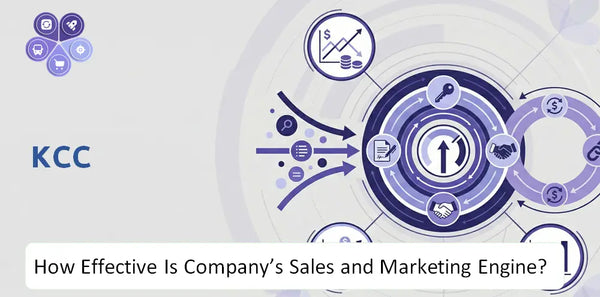
KCC's client-integration model raises switching costs and supports higher margins, but execution risk remains in raw-material exposure and cyclical end markets; investors should watch backlog and gross-margin trends.
KCC Porter's Five Forces AnalysisWhich Customers and Segments Is KCC Trying to Win?
KCC Corporation targets high-margin B2B accounts: global automotive OEMs for EV coatings and thermal materials, top-tier semiconductor manufacturers for high-purity EMC, and large-scale domestic apartment developers for architectural coatings; post-Momentive acquisition, North American and European industrial and healthcare/aerospace silicone customers are also priority buyers.
 Main customer: Global automotive OEMs and chipmakers
KCC Company sales effectiveness hinges on winning EV suppliers and Tier-1 automotive OEMs for functional coatings and thermal interface materials where specs and qualification cycles are long; similarly, KCC sales and marketing performance focuses on top semiconductor fabs needing high-purity Epoxy Molding Compounds (EMC), with capacity expansion to meet 2025 AI-driven demand.
Secondary targets: Infrastructure developers and industrial accounts
Domestically, KCC pursues B2B2C apartment reconstruction projects in South Korea to capture stable recurring volumes; post-Momentive, KCC's go-to-market strategy emphasizes large industrial customers in North America and Europe for high-end silicone applications in healthcare and aerospace.
Market positioning: Technical leader for mission-critical specs
KCC positions itself as a technology and quality leader, selling on qualification success, long-term supply agreements, and integrated technical service – key for converting high-value OEM and semiconductor accounts; CRM and sales process alignment focuses on long sales cycles and engineering validation steps.
Why these segments matter: margin, scale, and stickiness
These buyers drive higher gross margins and predictable revenue: automotive EV coatings and thermal materials boost per-unit value; EMC for chips scales with AI demand, supporting revenue growth in 2025; industrial silicones add cross-sell opportunities and higher lifetime customer value – improving KCC Company sales and marketing ROI.
Key figures: KCC expanded EMC capacity in 2024 – 2025 to support projected AI-driven demand growth; automotive EV component contracts represent a material share of new OEM wins in 2025; Momentive acquisition shifted roughly 20 – 30% of sales focus toward North America/Europe industrial accounts. See Ownership and Control of KCC Company for corporate context: Ownership and Control of KCC Company
KCC SWOT Analysis
- Complete SWOT Breakdown
- Fully Customizable
- Editable in Excel & Word
- Professional Formatting
- Investor-Ready Format

How Does KCC Acquire Demand Efficiently?
KCC Corporation acquires demand through a Design-In strategy with sales engineers for advanced materials and a dominant domestic distribution network of dealers and HomeCC interior hubs, backed by digital specification tools – this mix locks long-term contracts and captures both professional and retail demand efficiently.

Design-In: Early R&D Engagement
Sales engineers embed with client R&D during product design, securing specifications before market launch and creating high switching barriers that reduce lifetime customer acquisition cost.
Digital Reach and Specification Platforms
Architect specification tools and digital sales platforms streamline product selection and ordering, shortening sales cycles and improving conversion for architectural and insulation projects.
Dealer Network and HomeCC Retail Hubs
Over 3,500 dealers plus HomeCC interior hubs capture both contractor and retail consumer demand, providing wide geographic coverage and point-of-sale influence.
Demand-Generation Tactics
Field engineering consultations, specification workshops for architects, co-development pilot projects, and targeted trade events drive high-quality, project-based leads rather than broad top-of-funnel advertising.
Acquisition Efficiency
Design-In reduces churn and recurring acquisition spend; combined channels lowered marketing expense-to-revenue ratio and helped maintain a leading 38% market share in Korean architectural glass and insulation by early 2026.
Strongest Reach Advantage
The consultative Design-In model plus the extensive dealer/HomeCC footprint is KCC Company sales effectiveness' core advantage – locking durable, high-margin demand at scale.
For further context on target segments and channel performance see Target Market Analysis of KCC Company
KCC PESTLE Analysis
- Covers All 6 PESTLE Categories
- No Research Needed – Save Hours of Work
- Built by Experts, Trusted by Consultants
- Instant Download, Ready to Use
- 100% Editable, Fully Customizable

How Does KCC Convert Demand into Revenue Quality?
KCC Corporation converts demand into high-quality revenue by shifting sales toward higher-margin silicones and specialty materials, using price pass-through and long-term sector contracts to protect margins and stabilize cash flow. The sales model mixes direct industrial channels with export-led accounts, while pricing power and multi-year agreements support durable monetization.
Core sales model: product-led industrial channels
KCC Company sales effectiveness centers on B2B direct sales to automotive, marine, and construction OEMs plus global distributors; large export customers drive nearly 60% of revenue. Route-to-close relies on technical selling, long-term specs, and multi-year supply agreements that lock demand.
Pricing and monetization logic: pass-through and premium mix
KCC marketing engine effectiveness is anchored in aggressive product mix optimization and price pass-through: in 2025 the company raised ASPs on premium windows and insulation to offset higher energy and logistics costs, preserving EBITDA margins in silicones and specialty materials.
Conversion and purchase drivers: technical fit and contractual stability
Conversions hinge on product specs, regulatory/energy efficiency credentials, and engineered performance; multi-year marine and auto contracts reduce churn and convert pipeline into predictable revenue.
Repeat revenue and expansion: cross-sell and export diversification
Repeat purchases come from OEM lifecycle replacement and component upgrades; cross-selling silicones into existing paint and materials accounts improves customer lifetime value while exports diversify currency exposure and balance-sheet quality.

How KCC Company Converts Demand into Revenue Quality
KCC turns demand into durable, high-quality revenue by shifting sales mix to higher-margin silicones and specialty materials, exercising clear pricing power in 2025, and locking customers with multi-year supply contracts – while export-led sales boost balance-sheet resilience.
- Product-led B2B sales model with technical selling and long-term OEM contracts
- Pricing logic: proactive ASP increases and pass-through to protect margins
- Strongest conversion driver: multi-year supply agreements and specification wins
- Revenue-quality takeaway: higher-margin mix plus ~60% export exposure stabilizes EBITDA and currency diversification
See further context in this analysis: Growth Outlook Analysis of KCC Company
KCC Marketing Mix
- Complete Marketing Mix Analysis
- Effortlessly Communicate Your Business Strategy
- Investor-Ready Format
- 100% Editable and Customizable
- Clear and Structured Layout

What Does KCC Commercial Engine Mean for Future Performance?
KCC Corporation's commercial engine should support steady revenue and margin recovery through 2026 as specialty chemicals – silicones and semiconductor materials – offset South Korea construction weakness; new Hungary and U.S. lines plus strong cash flow will drive deleveraging but elevated debt remains a watch item.
Structural tailwinds supporting future demand
The pivot to silicones and semiconductor materials aligns KCC Company sales effectiveness with secular growth in EVs and semiconductors; ramping Hungarian and U.S. plants target localized EV and battery supply chains, lifting addressable market and expected revenue mix toward higher-margin specialty chemicals.
Channel and marketing effectiveness versus market needs
KCC marketing engine effectiveness appears adequate: regional production hubs reduce logistics friction and improve B2B sales cycles, while CRM and sales process upgrades and targeted account-based outreach should enhance lead conversion and customer retention in specialty segments.
Risks to commercial performance
Main risks include continued South Korean real estate stagnation, slower-than-expected ramp at new lines, and FX or raw-material volatility; high leverage from past acquisitions also raises refinancing and interest-cost risk despite rapid deleveraging via operating cash flow.
Overall commercial outlook for 2025/2026
Outlook is cautiously optimistic: KCC sales and marketing performance should drive operating profit margins in the 9% to 11% range for 2025/2026 as specialty chemical growth offsets domestic construction weakness; expect KCC Corporation to outperform regional peers as the global specialty chemical engine scales.
Key factual supports: new production capacity in Hungary and the U.S. targets EV/battery ecosystems, cash-flow-led deleveraging reduced net-debt ratios through 2025, and projected operating margins of 9% – 11% for 2025/2026 underpin the commercial durability; see company positioning in this review Mission, Vision, and Values Analysis of KCC Company.
KCC Porter's Five Forces Analysis
- Covers All 5 Competitive Forces in Detail
- Structured for Consultants, Students, and Founders
- 100% Editable in Microsoft Word & Excel
- Instant Digital Download – Use Immediately
- Compatible with Mac & PC – Fully Unlocked

Related Blogs
- How Did KCC Company Develop Into Its Current Investment Case?
- How Does KCC Company Work and What Drives Its Business Model?
- What Do the Mission, Vision, and Core Values of KCC Company Reveal to Investors?
- How Strong Is KCC Company's Competitive Position?
- How Credible Is the Growth Outlook of KCC Company?
- How Attractive Is KCC Company's Customer Base and Target Market?
- Who Owns KCC Company and Who Holds Real Control?
Frequently Asked Questions
KCC targets high-margin B2B buyers. Its main focus is global automotive OEMs for EV coatings and thermal materials, top semiconductor manufacturers for high-purity EMC, and large domestic apartment developers. After the Momentive acquisition, KCC also prioritized industrial, healthcare, and aerospace silicone customers in North America and Europe.
Disclaimer
All information, articles, and product details provided on this website are for general informational and educational purposes only. We do not claim any ownership over, nor do we intend to infringe upon, any trademarks, copyrights, logos, brand names, or other intellectual property mentioned or depicted on this site. Such intellectual property remains the property of its respective owners, and any references here are made solely for identification or informational purposes, without implying any affiliation, endorsement, or partnership.
We make no representations or warranties, express or implied, regarding the accuracy, completeness, or suitability of any content or products presented. Nothing on this website should be construed as legal, tax, investment, financial, medical, or other professional advice. In addition, no part of this site - including articles or product references - constitutes a solicitation, recommendation, endorsement, advertisement, or offer to buy or sell any securities, franchises, or other financial instruments, particularly in jurisdictions where such activity would be unlawful.
All content is of a general nature and may not address the specific circumstances of any individual or entity. It is not a substitute for professional advice or services. Any actions you take based on the information provided here are strictly at your own risk. You accept full responsibility for any decisions or outcomes arising from your use of this website and agree to release us from any liability in connection with your use of, or reliance upon, the content or products found herein.