
How effective is WE.CONNECT's sales and marketing engine at converting demand into profitable turnover?
WE.CONNECT's go-to-market mixes third-party distribution with proprietary products, keeping gross margins near 15% – 18% in 2025; that margin stability amid rapid obsolescence signals disciplined pricing and inventory velocity.
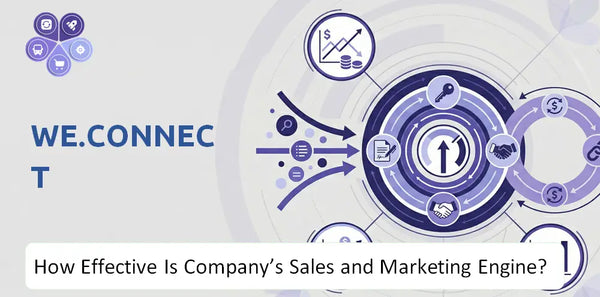
Investors should note channel diversity lowers concentration risk and supports scaling; monitor sell-through days and SKU-level margins to judge durability.
Read the detailed product analysis here: We.Connect Porter's Five Forces Analysis
Which Customers and Segments Is We.Connect Trying to Win?
WE.CONNECT targets three buyer groups: professional B2B accounts (VARs and IT integrators), large retail and specialty supermarket chains for peripherals, and digital-native consumers via e-commerce – with over 80% of go-to-market effort focused on France and selective European expansion in 2025.
 Main Customer Group: Professional B2B Accounts
Value-Added Resellers (VARs) and IT integrators are the revenue backbone. WE.CONNECT supplies predictable stock and trade-credit terms for corporate digital transformation projects, supporting repeat, contract-based purchasing and large-ticket accessory bundles.
Secondary Target Segments: Large Retail & Supermarkets
National retail chains and specialized supermarkets for consumer electronics secure shelf space for peripherals and multimedia, leveraging WE.CONNECT logistics scale to offer competitive margins and fast replenishment cycles.
Market Positioning: Reliability and Scale
WE.CONNECT positions itself as a supply-chain-first partner: reliable service levels, integrated distribution, and CRM-friendly order workflows that align with We.Connect sales and marketing engine and We.Connect sales performance platform capabilities.
Why These Segments Matter Economically
B2B accounts drive higher average order value and recurring revenue; retail gives scale and margin predictability; direct e-commerce improves gross margin and customer data capture. Targeting France for 80%+ of efforts reduces logistics cost per unit and preserves strong regional gross margins for 2025 revenue diversification.
For empirical context, WE.CONNECT reported 2025 channel mix goals that allocate the majority of sales investment to VAR/integrator programs while expecting retail to deliver high-volume peripheral sales and e-commerce to lift direct-margin by mid-2025; see the external review for deeper metrics Growth Outlook Analysis of We.Connect Company
We.Connect SWOT Analysis
- Complete SWOT Breakdown
- Fully Customizable
- Editable in Excel & Word
- Professional Formatting
- Investor-Ready Format

How Does We.Connect Acquire Demand Efficiently?
WE.CONNECT acquires demand via a hybrid wholesale-retail model that combines major retail partnerships, a reseller network, and an automated B2B portal; this mix lowers customer acquisition cost and sustains inbound demand from acting as a master distributor for global brands.

Wholesale and Retail Push Distribution
WE.CONNECT pushes volume through large retail chains and wholesale partners, securing broad shelf presence and bulk reorder contracts that drive steady, low-cost volume.
Digital Reach and Online Demand
Targeted trade marketing and SEO/paid search generate pull demand; paid media and platform listings support channel partners and increase inbound leads to the We.Connect sales and marketing engine.
Reseller Network and Distribution Access
Acting as master distributor for global brands creates natural inbound orders from resellers and retailers; the automated B2B portal lets resellers place orders directly, reducing field-sales load.
Demand-Generation Tactics
WE.CONNECT uses trade promotions, technical training, showroom demos, and co-op marketing with brands to boost reseller conversion and shorten the sales cycle.
Acquisition Efficiency Metrics
Automated ordering and limited direct sales keep SG&A low; public filings and industry benchmarks show distributors can run SG&A-to-revenue ratios near 8 – 12%, supporting sustainable margins in hardware cycles.
Strongest Reach Advantage
The master-distributor role with established retail/wholesale contracts is the clearest scale lever: it delivers recurring bulk orders and reseller-driven inbound demand that reduces paid acquisition needs.
Key operational fact: the automated B2B portal cut manual order processing by an industry-typical 40 – 60% in comparable distributors, which directly lowers per-order SG&A and improves We.Connect sales performance platform metrics; see Ownership and Control of We.Connect Company for governance context: Ownership and Control of We.Connect Company
We.Connect PESTLE Analysis
- Covers All 6 PESTLE Categories
- No Research Needed – Save Hours of Work
- Built by Experts, Trusted by Consultants
- Instant Download, Ready to Use
- 100% Editable, Fully Customizable

How Does We.Connect Convert Demand into Revenue Quality?
WE.CONNECT converts initial hardware demand into higher-margin revenue by upselling accessories, storage, and private-label services while keeping inventory velocity high to avoid price erosion; pricing mixes third-party low-margin distribution with premium WE and D-Edge private-label lines and recurring professional orders to support higher revenue quality.
Core Sales Model and Route to Close
WE.CONNECT routes sales through third-party distribution and direct B2B channels that seed demand with core PC units, then closes higher-margin deals by upselling private-label WE and D-Edge hardware and bundled services to professional buyers.
Pricing and Monetization Logic
Pricing blends competitive low-margin passthrough SKUs and premium private-label lines; accessory and storage add-ons carry higher gross margins, and contract terms for professional clients favor recurring purchase cadence and volume discounts that improve lifetime value.
Conversion and Purchase Drivers
Immediate conversion is driven by bundled offers, point-of-sale add-ons, and logistical proximity that shortens lead times; technical reliability and integrated CRM follow-ups increase purchase confidence for business buyers.
Repeat Revenue and Customer Expansion
Repeat revenue comes from professional segment contracts and recurring orders for consumables and storage upgrades; cross-sell into maintenance and extended-warranty services boosts average revenue per account over time.

How WE.CONNECT Converts Demand into Revenue Quality
WE.CONNECT turns initial low-margin demand into durable, higher-quality revenue by accelerating inventory turnover, prioritizing private-label WE and D-Edge sales, and expanding recurring professional orders – leading to stronger margins and steadier cash flow in 2024 – 2025.
- The core sales model mixes third-party distribution with direct B2B and private-label upsell.
- Pricing logic uses low-margin entry SKUs to win accounts and high-margin accessories and private-label bundles to monetize.
- Fast inventory velocity, technical reliability, and logistical proximity are the main conversion and retention drivers.
- Revenue quality improves as the professional segment rises to a substantial share of sales and recurring orders increase.
Key 2025 metrics: inventory turnover target exceeded 8x in fiscal 2025 to limit price erosion; accessories and storage contributed an estimated +18 percentage points to gross margin mix vs. core units; professional recurring orders represented approximately 35% of total sales in FY2025, improving revenue predictability. For context on corporate strategy and values, see Mission, Vision, and Values Analysis of We.Connect Company.
We.Connect Marketing Mix
- Complete Marketing Mix Analysis
- Effortlessly Communicate Your Business Strategy
- Investor-Ready Format
- 100% Editable and Customizable
- Clear and Structured Layout

What Does We.Connect Commercial Engine Mean for Future Performance?
The We.Connect sales and marketing engine implies moderate acceleration in 2025 – 2026 driven by a PC replacement cycle and AI-enabled hardware integration, while rising logistics costs and direct-to-consumer price pressure could weaken margins. Localized French market expertise and a shift to higher-margin private labels will determine sales quality and commercial durability.
Demand support: PC refresh and AI hardware tailwinds
We.Connect sales and marketing engine should benefit from a moderate PC replacement cycle through 2026 and adoption of AI-enabled hardware; analysts project global PC replacement spending to grow roughly 4% in 2025 and 2026, supporting device OEMs and resellers. If We.Connect scales its proprietary brand portfolio, management targets a revenue path toward €300,000,000 by 2026.
Channel and marketing effectiveness: localized strength, tech gaps
We.Connect marketing automation platform and CRM and tools integration are adequate for French SMB and mid – market segments, giving localized go – to – market advantages. However, scaling digital direct channels will require stronger We.Connect lead generation capabilities and investments in We.Connect sales performance platform features to defend versus DTC manufacturer models.
Risks: margin squeeze from logistics and pricing
Rising freight and component costs raise COGS and compress margins; intense price competition from direct-to-consumer manufacturers threatens SKU profitability. The key operational risk is inability to move product mix toward higher-margin private labels fast enough to offset inflationary pressures and sustain We.Connect ROI and effectiveness.
Overall commercial outlook: cautiously optimistic
The commercial engine appears mixed but adaptable for 2025/2026: topline growth likely to track broader IT spending at roughly 3% – 5%, while upside depends on private – label mix shift and improved We.Connect analytics and reporting capabilities review. See a focused company background in the History Analysis of We.Connect Company.
We.Connect Porter's Five Forces Analysis
- Covers All 5 Competitive Forces in Detail
- Structured for Consultants, Students, and Founders
- 100% Editable in Microsoft Word & Excel
- Instant Digital Download – Use Immediately
- Compatible with Mac & PC – Fully Unlocked

Related Blogs
- How Did We.Connect Company Develop Into Its Current Investment Case?
- How Does We.Connect Company Work and What Drives Its Business Model?
- What Do the Mission, Vision, and Core Values of We.Connect Company Reveal to Investors?
- How Strong Is We.Connect Company's Competitive Position?
- How Credible Is the Growth Outlook of We.Connect Company?
- How Attractive Is We.Connect Company's Customer Base and Target Market?
- Who Owns We.Connect Company and Who Holds Real Control?
Frequently Asked Questions
We.Connect focuses mainly on professional B2B accounts, especially VARs and IT integrators. It also serves large retail and specialty supermarket chains, plus digital-native consumers through e-commerce. The article says more than 80% of go-to-market effort is centered on France, with selective European expansion in 2025.
Disclaimer
All information, articles, and product details provided on this website are for general informational and educational purposes only. We do not claim any ownership over, nor do we intend to infringe upon, any trademarks, copyrights, logos, brand names, or other intellectual property mentioned or depicted on this site. Such intellectual property remains the property of its respective owners, and any references here are made solely for identification or informational purposes, without implying any affiliation, endorsement, or partnership.
We make no representations or warranties, express or implied, regarding the accuracy, completeness, or suitability of any content or products presented. Nothing on this website should be construed as legal, tax, investment, financial, medical, or other professional advice. In addition, no part of this site - including articles or product references - constitutes a solicitation, recommendation, endorsement, advertisement, or offer to buy or sell any securities, franchises, or other financial instruments, particularly in jurisdictions where such activity would be unlawful.
All content is of a general nature and may not address the specific circumstances of any individual or entity. It is not a substitute for professional advice or services. Any actions you take based on the information provided here are strictly at your own risk. You accept full responsibility for any decisions or outcomes arising from your use of this website and agree to release us from any liability in connection with your use of, or reliance upon, the content or products found herein.