
How effective is ABM Industries Incorporated's sales and marketing engine at acquiring high-value national accounts and improving conversion quality?
ABM's go-to-market drives margin expansion under the ELEVATE strategy, targeting tech-enabled facility solutions in a fragmented $100,000,000,000 market. In 2025 ABM showed progress winning multi-year national contracts that stabilize cash flow and reduce local labor risk.
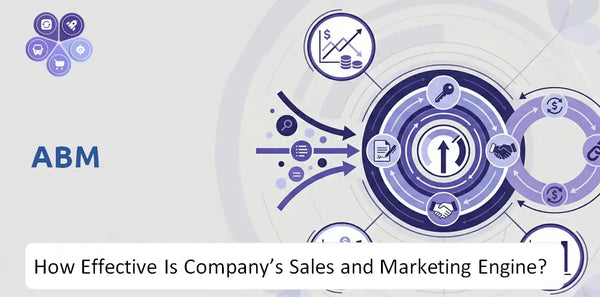
Investors should track account wins, cross-sell rates, and contract duration; rising national-account mix reduces revenue volatility and strengthens recurring margins. See product analysis: ABM Porter's Five Forces Analysis
Which Customers and Segments Is ABM Trying to Win?
ABM Industries Incorporated targets Fortune 500 and large institutional accounts in five core segments: Business and Industry, Technology and Manufacturing, Education, Aviation, and Technical Solutions. The commercial engine prioritizes mission-critical, high-density sites – especially data centers and semiconductor fabs – plus clients seeking ESG-aligned energy performance contracting.
 Main Customer Group: Large, Mission-Critical Enterprises
ABM Industries Incorporated focuses on Fortune 500s and multi-site institutional clients that need integrated facility services across geographies. These buyers demand high service reliability, technical scope, and centralized contract management, which lifts ABM company effectiveness and account-based marketing ROI.
Secondary Target Segments: Technology & Manufacturing Clusters
Priority on data center operators and semiconductor manufacturers in 2025 – 2026, plus large campuses in Education and Aviation. These adjacent segments require advanced technical services and ESG solutions, improving ABM sales-marketing alignment and expansion potential.
Market Positioning: Technical, ESG-Forward Partner
ABM Industries Incorporated positions itself as a technical facilities partner delivering energy performance contracting, ESG reporting, and integrated operations rather than commodity janitorial work. This messaging supports ABM performance metrics focused on higher margin contracts and longer-term service agreements.
Why These Segments Matter: Revenue Quality and Margin Upside
High-density, mission-critical accounts generate higher average contract values and lower churn; in 2025 ABM Industries Incorporated reported growth weighted to technical services where gross margins exceed commodity services by an estimated ~8 – 12 percentage points. Winning ESG and energy contracting deals increases recurring revenue and raises lifetime value per account, improving impact of ABM engine on revenue growth.
For practical evaluation and benchmarks on segment targeting and ABM effectiveness, see Target Market Analysis of ABM Company.
ABM SWOT Analysis
- Complete SWOT Breakdown
- Fully Customizable
- Editable in Excel & Word
- Professional Formatting
- Investor-Ready Format

How Does ABM Acquire Demand Efficiently?
ABM Industries Incorporated acquires demand through a centralized, data-driven national account model and the AbmNexus digital platform, targeting enterprise RFPs and technical-entry wins to lower customer acquisition cost and expand into full-service contracts.

National account RFP targeting
ABM Company effectiveness centers on a national account management structure that chases large enterprise RFPs; this reduces redundant local bids and drives higher win rates on multi-site contracts.
Digital reach via AbmNexus
AbmNexus centralizes sales intelligence, digital proposals, and performance dashboards; online search and platform-driven lead routing improved response time and conversion on enterprise leads in 2025.
Field sales and technical channels
Field account teams plus Technical Solutions specialists (HVAC, EV infrastructure) act as on-the-ground sellers and installers, converting technical pilots into broader facility-services contracts.
Demand-generation tactics
Targeted enterprise RFP responses, technical pilots, industry events, and channel partnerships drive qualified demand; 2025 saw increased use of technical case studies to accelerate decision cycles.
Acquisition efficiency metrics
Proprietary pricing engine uses real-time labor market data to protect 6.5 to 7.0 percent adjusted EBITDA margins; national account wins reduce CAC versus localized bids, improving ABM sales and marketing engine ROI.
Strongest reach advantage
Technical Solutions as a wedge – especially HVAC and EV infrastructure – provides the clearest scalable entry point, converting specialized installs into recurring full-service revenue and higher lifetime value.
See detailed operational and business model context in this article: Business Model Analysis of ABM Company
ABM PESTLE Analysis
- Covers All 6 PESTLE Categories
- No Research Needed – Save Hours of Work
- Built by Experts, Trusted by Consultants
- Instant Download, Ready to Use
- 100% Editable, Fully Customizable

How Does ABM Convert Demand into Revenue Quality?
ABM Industries Incorporated converts demand into high-quality revenue by locking in long-term contracts and bundling integrated facility services, driving sticky onsite teams and predictable cash flows. The sales model emphasizes cross-selling into higher-margin Project Work and Technical Solutions while shifting pricing toward fixed-fee and cost-plus-incentive-fee structures for better revenue visibility.
Core Sales Model: Embedded Onsite Teams and Bundled Services
Field sales and national account teams win multi-line facility contracts and place embedded ABM teams onsite; those teams create high retention by becoming operationally integral. Cross-sell velocity focuses on adding Project Work and Technical Solutions to janitorial bases to lift average service lines per client.
Pricing and Monetization Logic: Shift to Fixed-Fee and CPI-Style Contracts
Contracts migrated from hourly billing to fixed-fee or cost-plus-incentive-fee (CPI) structures, improving margin predictability and cash flow visibility; pricing discipline targets contract-level gross margins above historical janitorial averages. For fiscal 2025, ABM reported greater mix of specialty services lifting blended margins.
Conversion and Purchase Drivers: Onsite Value and Upsell Triggers
Demonstrable onsite performance, service integration, and warranty-like guarantees convert demand into signed contracts; procurement favors bundled vendors to reduce vendor count and operational friction, accelerating deals. Focused bids for Project Work create immediate upsell pathways.
Repeat Revenue and Customer Expansion: High Retention, Multi-Service Depth
Retention rates consistently exceed 90 percent, reflecting sticky relationships and embedded teams; cross-sell drives higher average revenue per account as Technical Solutions and Project Work offset lower-margin janitorial services. Sales efficiency is measured by increasing average service lines per client and reduced churn.

How ABM Industries Incorporated Converts Demand into Revenue Quality
ABM converts demand into durable revenue by combining >90% contract retention, bundled service cross-sell, and a pricing shift to fixed-fee and cost-plus-incentive-fee contracts that enhance visibility and margin quality; fiscal 2025 execution emphasized Project Work and Technical Solutions to improve blended margins.
- Core sales model: Embedded onsite teams plus national account selling
- Pricing logic: Move from hourly to fixed-fee and cost-plus-incentive-fee contracts
- Strongest conversion driver: Operational integration and bundled service value
- Revenue-quality takeaway: >90 percent retention and upsell into higher-margin specialty work
For context on the company's evolution and strategic playbook, see History Analysis of ABM Company.
ABM Marketing Mix
- Complete Marketing Mix Analysis
- Effortlessly Communicate Your Business Strategy
- Investor-Ready Format
- 100% Editable and Customizable
- Clear and Structured Layout

What Does ABM Commercial Engine Mean for Future Performance?
ABM Industries Incorporated's commercial engine should drive steady organic revenue and margin expansion through 2026, supported by digital selling under ELEVATE and demand in electrification and energy-efficiency services; persistent labor-cost inflation and cyclic corporate real estate spending are primary downside risks.
Tailwinds: Electrification and Energy-Efficiency Demand
Rising investment in electrification and energy efficiency is the strongest support for future demand quality; U.S. commercial energy-efficiency spending is projected to grow at double-digit rates through 2026, and ABM's technical services unit already generates higher margins and faster growth, shifting sales mix toward higher-value offerings.
Channel and Marketing Effectiveness: ELEVATE and Account-Focused Sales
The ELEVATE digital tools and tighter account-based marketing / sales-marketing alignment have improved pipeline velocity and conversion metrics; field teams are more agile, enabling better account penetration and higher account-based marketing ROI on large technical contracts.
Risks to Commercial Performance: Labor Inflation and Macro Volatility
Persistent labor inflation remains the key commercial risk – wage-driven cost pressure can compress margins if price-escalation clauses lag; slower corporate real-estate reopenings or capex pullbacks could also slow large-service bookings.
Overall Commercial Outlook: Stable Growth with Margin Upside
Professional judgment for 2025/2026 indicates ABM Industries Incorporated will remain a reliable cash-flow generator with projected annual revenue growth of 3 to 5 percent and ongoing incremental margin accretion as the sales mix shifts to technical services; improved contract management and disciplined price escalation form a defensive moat.
Key metrics to watch: revenue CAGR to 2026, incremental margin from technical services, contract renewal rates, price-escalation realization, and labor-cost delta versus revenue; see Ownership and Control of ABM Company for governance context: Ownership and Control of ABM Company
ABM Porter's Five Forces Analysis
- Covers All 5 Competitive Forces in Detail
- Structured for Consultants, Students, and Founders
- 100% Editable in Microsoft Word & Excel
- Instant Digital Download – Use Immediately
- Compatible with Mac & PC – Fully Unlocked

Related Blogs
- How Did ABM Company Develop Into Its Current Investment Case?
- How Does ABM Company Work and What Drives Its Business Model?
- What Do the Mission, Vision, and Core Values of ABM Company Reveal to Investors?
- How Strong Is ABM Company's Competitive Position?
- How Credible Is the Growth Outlook of ABM Company?
- How Attractive Is ABM Company's Customer Base and Target Market?
- Who Owns ABM Company and Who Holds Real Control?
Frequently Asked Questions
ABM focuses on Fortune 500 and large institutional accounts across Business and Industry, Technology and Manufacturing, Education, Aviation, and Technical Solutions. The blog says it prioritizes mission-critical, high-density sites such as data centers and semiconductor fabs, along with clients seeking ESG-aligned energy performance contracting.
Disclaimer
All information, articles, and product details provided on this website are for general informational and educational purposes only. We do not claim any ownership over, nor do we intend to infringe upon, any trademarks, copyrights, logos, brand names, or other intellectual property mentioned or depicted on this site. Such intellectual property remains the property of its respective owners, and any references here are made solely for identification or informational purposes, without implying any affiliation, endorsement, or partnership.
We make no representations or warranties, express or implied, regarding the accuracy, completeness, or suitability of any content or products presented. Nothing on this website should be construed as legal, tax, investment, financial, medical, or other professional advice. In addition, no part of this site - including articles or product references - constitutes a solicitation, recommendation, endorsement, advertisement, or offer to buy or sell any securities, franchises, or other financial instruments, particularly in jurisdictions where such activity would be unlawful.
All content is of a general nature and may not address the specific circumstances of any individual or entity. It is not a substitute for professional advice or services. Any actions you take based on the information provided here are strictly at your own risk. You accept full responsibility for any decisions or outcomes arising from your use of this website and agree to release us from any liability in connection with your use of, or reliance upon, the content or products found herein.